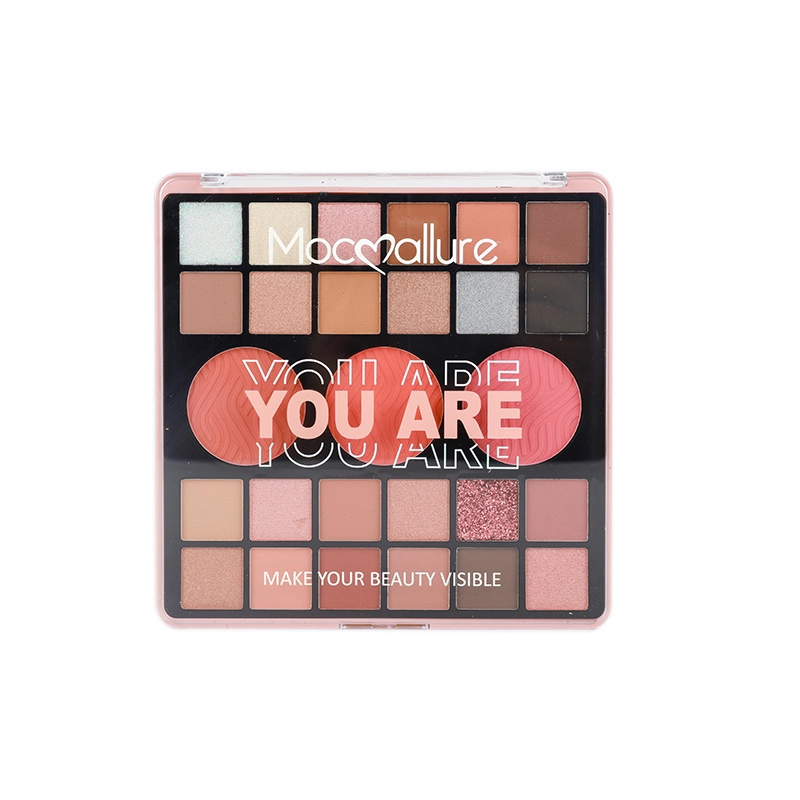
For wholesale eye and cheek palettes, the purchase starts with the assembled sample: try the eye-and-blush pairing you plan to sell, see whether a customer brush reaches the cheek pan, and arrange the intended-use review. Once those decisions are settled, ask the supplier to price the selected version and quantity. The quotation can then describe a selected colorway and the product or branding changes it needs. The extra colors in a larger palette need a reason to be in your retail offer.
A makeup gift and a blush replacement are two quite different purchases, even if both customers browse the same display. The gift shopper may welcome colors already paired in a case. The returning blush customer might have no use for another set of eye shades. The buying brief should explain which of those needs your store is serving.
Choose a retail purpose for the combination
Imagine the short description beside the retail display. A warm everyday look calls for eye colors and blush that the buyer has tried as a combination. For a gift aimed at someone who enjoys experimenting, the brief could allow a wider choice. You don’t need an elaborate technical specification to begin, but you do need a reason for the customer to buy these colors together.
Mocoallure’s ES3810 eye and cheek palette is a useful format reference for that discussion. Its rectangular case combines 24 eyeshadow shades with three larger blush pans. This makes it an eye-led product with a dedicated cheek section. That balance is a reason to try the sample with the retail brief beside it: the buying question is whether the cheek section makes the eye selection more useful to this customer.
Neutral, brown, pink, and coral tones give ES3810 its warm color direction, while the clear lid keeps the arrangement visible when the case is shut. A buyer looking for a cooler selection can use that contrast to explain the requested change, just as a different arrangement can be discussed against the existing layout. Those changes need a project discussion rather than an assumption that every variation is available.
Buy the looks the palette can deliver
Choose the combinations the retail description promises, then try those combinations in the sample. A swatch sheet can be full of observations without telling you whether the proposed cheek color works with the eye look. Write the pan references beside the combinations you tried; the supplier then has something to connect your comments to.
Take feedback beyond a broad request for stronger or softer color. A comment such as “keep this eye combination, but discuss another cheek pairing” is an illustrative request with a clear subject, provided the selected pans are identified. The sample discussion then has a specific pairing to address.
For retailers developing coordinated eye and cheek collections, the combined format offers a convenient way to present complementary shades in one retail unit. The store may already have standalone blush that its customers know and replace regularly. In that situation, a combined palette needs an additional reason to join the range. Put that reason in the brief instead of letting the case design decide the purchase.
Test the cheek section with likely customer tools
Take a blush brush like the one your customer is likely to own and try it in the open sample. The interesting detail is where the bristles touch as color is picked up. If they reach a neighboring eye shade as well as the cheek pan, you have a handling observation to bring into the layout discussion. Loose pans can help with color selection, but they cannot answer this question about the finished case.
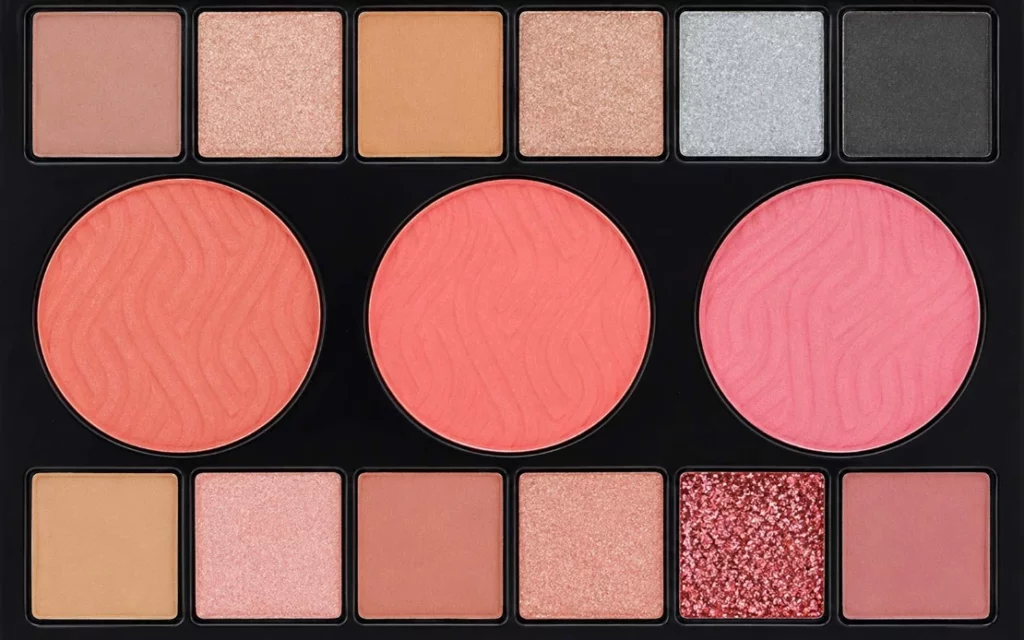
There’s also a replacement question. Consider a shopper who keeps returning to one blush while switching between several eye shades. The blush could run out with plenty of the eye section left. Larger cheek pans may be relevant to that purchase, but neither a photograph nor pan size gives the buyer a fill weight or a dependable replacement interval.
Review standalone blush formats where independent replacement is important. For this purchase, does keeping the colors together matter more than replacing the cheek product independently? A retailer carrying both formats can give them different jobs in the range. Margin still needs the actual buying and selling costs; it cannot be read from the number of products in the case.
| Buyer question | Combined eye and cheek palette | Separate products |
| How is the pairing presented? | Eye and cheek colors are sold together | The pairing is chosen across products |
| What can be replaced? | Both sections belong to one retail unit | One category can be replaced independently |
| What does the sample need to resolve? | Color pairing and handling within a shared case | Each product and pack separately |
The comparison settles the format question, leaving demand forecasting to the buyer’s own retail evidence. Keep quantities by finished colorway in the order request. Those references become particularly useful on a reorder: “the warm palette” may no longer identify the version if other colorways have joined the range.
Keep the intended applications clear
A shared case can contain dedicated eye shades and dedicated blush. That arrangement tells you which functions are combined, without establishing permission to move a cheek color to the eyes or lips. Retail wording should describe the functions accurately. The consumer directions need to reflect the applications reviewed for the selected formulations.
For US sales, give the product reviewer the formula information and proposed directions together. The FDA color-additive requirements require permission for the intended use, including eye-area use. Exemption from batch certification does not remove use restrictions. Have this checked before artwork is finalized, so the product information and pack describe the same applications.
A map linking pan position, shade reference, and intended area makes that review easier to follow. A commercial shade name may not identify the formulation behind it. Ask how those references connect for the selected version. If development changes a base or pigment, update the relevant records along with the sample.
Approve a sample that represents the retail unit
After trying the combinations, examine the closure, pan attachment, surface condition, and shade identification. Observe powder transfer between sections during normal handling. Agree on the transport checks needed for the route. These are questions about the assembled product, which is why approval should not stop at loose color samples or a layout photograph.
Keep the physical reference with dated comments and its version details. Keep responsibility for the product decision clear when artwork and market copy pass through other hands. A person agreeing to the layout may never have evaluated the texture or applied color. Date the separate approvals and reopen the relevant decision if the formulation changes.
Mocoallure’s OEM/ODM development support covers formula development, package design, and mass production. Use that connected scope to describe the work your palette needs. A new blush pairing concerns the product, clearer section identification concerns presentation, and a revised layout needs its own feasibility discussion. Giving each change a purpose makes the project more specific than a general inquiry for custom makeup.
Make the inquiry specific enough to quote
Separate what stays as supplied from what needs development. New branding on an existing format is one request; changed colors or a new structure create others. A useful request puts the required product changes ahead of optional decoration, with questions about MOQ, samples, timing, and quotation inclusions attached to that scope.
Here is an illustrative opening for the buyer’s inquiry:
“ES3810 is our reference for an eye-and-cheek palette for US retail. We are considering the warm color direction and existing layout with private label branding. What MOQ and sample scope would apply to this request, and which changes would need development? Please include the packing basis and the information needed for a quotation.”
This is an illustrative inquiry; the order terms and specification still need agreement. Add the quantity by finished colorway and any essential changes for your own project. Two answers matter to the stock commitment: whether the quoted quantity is per version or for the whole order, and whether mixed versions are possible within a case.
Conclusion
Choose wholesale eye and cheek palettes as a finished combination, with a purpose your store can explain. The eye look, blush pairing, likely customer tools, and replacement pattern all influence whether the shared case is useful. Keep intended-use review, consumer directions, and the physical sample connected through approval.
Once the format is right, request the selected version, quantities by colorway, changes, and packing terms. Retain the shade, component, and artwork references for reorders, with a review step for substitutions. Make the format decision before development or bulk ordering begins.
To discuss an eye and cheek palette order with Mocoallure, send your reference, market, quantities, and requested changes. The sample questions are worth sending with the inquiry, especially where the color pairing or assembled layout is still undecided.
FAQ
How does an eye and cheek palette differ from an eyeshadow palette?
The cheek section is the difference. With ES3810, for example, the buyer is choosing three blush pans alongside 24 eyeshadow shades in one case. An eyeshadow-only order leaves the cheek purchase separate. Whichever format you select, retail directions need to match the applications reviewed for its formulations.
What should a private label palette inquiry include?
Include the reference, market, quantities by colorway, and required product or packaging changes. The intended look belongs in the brief too, so a request for another color has a purpose. Those details give the supplier a version to discuss and a basis for addressing development, sample scope, and order terms.
Can a blush pan in the palette be used around the eyes?
Only where the formulation and proposed application have been reviewed for that use in the destination market. In the US, that includes checking the eye-area permissions for its color additives. The case layout or the name ‘multi-use’ cannot settle the question; use the reviewed applications when writing consumer directions.