A sample might catch the lamp as the model turns and still leave a pale stripe when seen straight on. A buying team could approve the first view for a campaign and still reject the second for the shop floor. Both views belong in the first review of a private label silver highlighter. So does a champagne sample, brushed on in the same way, to give the team a warmer shade to compare it with.
The brief can be as specific as “visible on the turn, soft edge at rest.” That is more useful at the sample table than asking for a stronger frost. A stronger frost might mean more reflection to the brand and more powder to the person preparing the sample.
One frosted reference, two briefs
“Frosted makeup” was up 286% in Pinterest searches in the platform’s 2026 beauty trend report. The term covers more than cheeks. A product team could save an image for the color of the reflection and set aside the rest of the look. Whether the same effect works by the window in a shop is a question for the sample.
An evening campaign and a daylight counter can share a reference image. They will probably need different notes on the test sheet. The campaign team may want the silver to read from across a set. At the counter, the wearer is closer to the mirror and has time to see what the powder leaves around the edge.
A reference marked up for the cheek alone keeps the request focused. A circle around the part of the image that reflects light, paired with a note on where the edge should disappear into the base makeup, gives the reviewer two separate features to look for. If a reference is a video, a timestamp can identify the frame that prompted the request.
There is also a decision to make about acceptable variation. A buyer may accept a stronger flash for an evening launch but still reject visible flecks outside the applied area. Putting one must-have and one rejection point on the brief makes it easier to explain why a sample that looks close in a photo still needs work.
The silver and champagne comparison
A side-by-side review starts with two labeled samples and the same brush type. A finger swatch can go on a separate part of the sheet. It usually lays down a denser patch than a light brush pass, so the two methods should be kept apart in the record.
The first samples to ask for
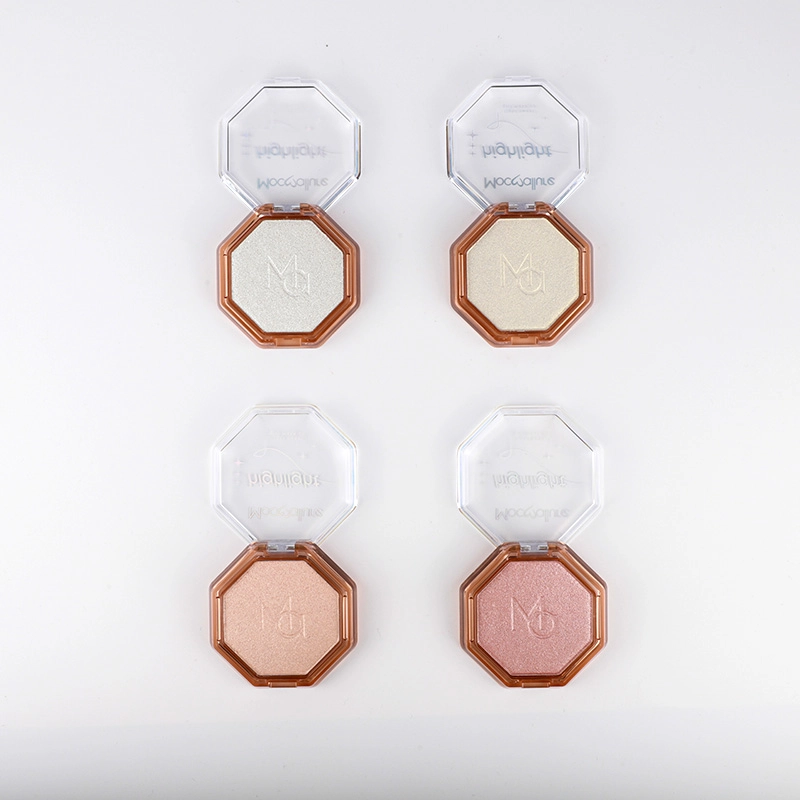
Mocoallure lists silver, champagne and rose gold for the ES5103 octagonal highlighter. The silver and champagne references are in the same compact format. The quote contact can confirm which samples are available and how closely each represents the version under discussion. The request can distinguish the listed color from the finish being evaluated. An inquiry that specifies silver with a narrow reflection and a softly blended edge gives the supplier a clearer target than the shade name alone.
The moment the face turns
A cloudy window or a diffused lamp makes a useful first stop. The reviewer can check whether the brushed area merges at its edges. Next comes the angled lamp, with the model turning slowly enough to see when the flash appears and drops out. Both passes should include skin depths that represent the proposed range of customers.
| Check | Diffuse light | Angled light |
| The base | Is there a pale edge after blending? | Does the base remain visible when the flash drops out? |
| The reflection | How visible is the silver straight on? | Where does the flash appear on the turn? |
| An extra brush pass | Does the edge get wider or harder? | Does the stronger flash still fit the brief? |
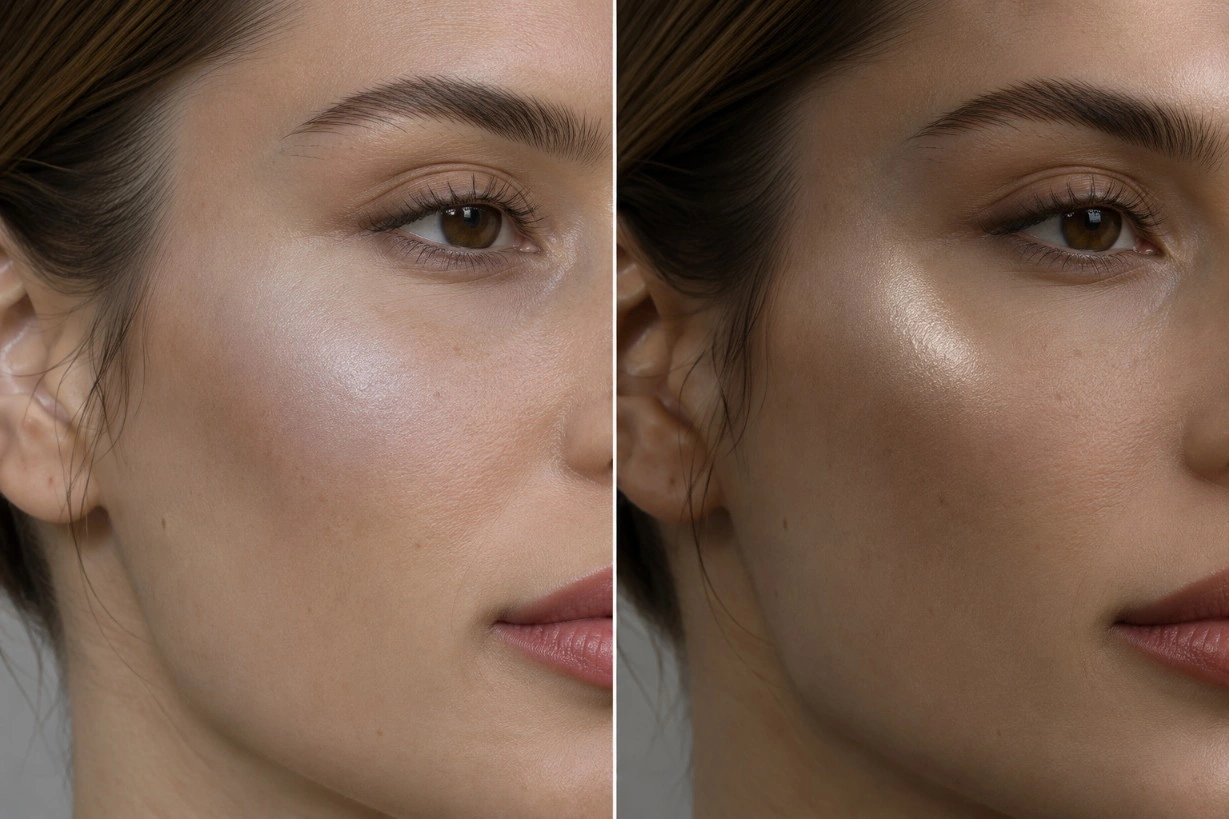
For later comparison, the shade and light can go in each photo filename. Fixed exposure and camera angle help the reviewer see whether a change in the image comes from the sample or the setup. The photos can stay with the swatch notes as the review moves from bare skin to the intended base.
A second check over the intended base
A bare-skin swatch gives the reviewer a clean starting point. If the campaign model will wear foundation, a second comparison over the planned base is useful. The brush can leave a different edge over a set base than over bare skin. The record should say whether the foundation was set with powder, since a future reviewer may otherwise struggle to reproduce the application.
If both shades pick up the same patchy edge over the foundation, that gives the team a reason to recheck the application before requesting a powder change. If the silver alone shows the issue under the same conditions, the buyer can describe where the difference appeared and include that observation with the swatch photos.
The change note and the order
“Keep the silver on the turn. Soften the pale edge by the window.” Those two lines describe a possible revision without asking for a different color. The old silver sample stays with the photos. If a revised sample is available, the same brush pass gives the reviewer a way to check the change.
An inquiry for ES5103 can name the sample ID and the octagonal compact separately. The sample ID points to the powder that was reviewed. The compact reference tells the supplier what the buyer wants priced. An updated quote can then identify the shade and pack available for the proposed quantity and destination, with artwork, any customization and lead time to be confirmed.
Sometimes the first test settles the silver while leaving the format open. Mocoallure’s private label highlighter development guide covers the wider choice of shades and packs. The next decision is what the buyer can sign off from the sample already reviewed and what still needs to be seen in the final compact.
What gets approved before bulk
A shade approval should be traceable to the swatch that received it. A short entry with the sample ID, date and two photos is enough to distinguish it from a later version. The same entry can say whether the approval applies to a loose pan or a complete compact. When a quote refers to an earlier sample, that note gives the buyer a concrete discrepancy to resolve.
On an assembled sample, the brush used for the comparison should be able to reach the powder in the proposed pan. The team can also check whether the shade name on the artwork is the one used on the sample record. A pack and a pan that pass those checks can be recorded together, so a repeat order starts with a clear reference.
Which changes call for a new sample
Changing the shade name on the artwork calls for a proof check. Changing the powder or the pan after approval calls for more than a proof. An updated sample can go back under the same two lights before the new version is accepted. If the replacement also changes the compact, the buyer can keep the previous sample on the table to see which differences come from the powder and which come from the pack.
Conclusion
The two photos answer different questions. The straight-on view records what stays on the cheek. The angled view records what appears when the wearer turns. A buying team can attach both views and request a silver highlighter sample and quote from Mocoallure using the ES5103 reference, order quantity and destination.
FAQ
Can a white pearl reference swatch stand in for a silver sample?
It can help set the brightness reference. A shade decision still calls for the actual silver on skin because similar pans can leave different casts after blending.
Is one flash photograph enough to approve the finish?
A flash photograph records one angle and one lighting setup. A daylight counter product needs an additional view under softer light, with particular attention to the blended edge.
Can a shade name be approved from a digital mockup?
A mockup can show how the name sits on the label. A physical sample is still needed to judge whether a name such as “Icy Silver” fits the finish under the lighting used for approval.