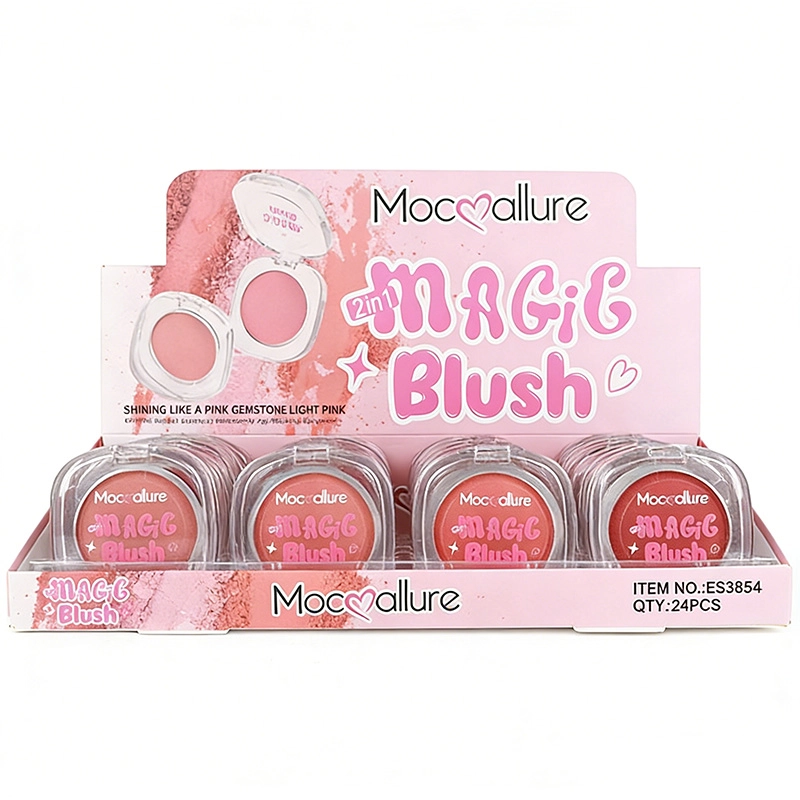
Before placing an order for wholesale blush display packs, the buyer needs a written shade breakdown and a clear answer on refills. How many saleable compacts arrive in each pack? Are testers additional? Can a repeat order replace one shade without adding the whole assortment again? These details determine both the opening allocation and the stock left after replenishment.
With those agreed, the buyer can turn a display count into a store allocation and a purchase order. The awkward situation is a counter with several slow shades left and one empty position. Another mixed pack fills that gap, but the unsold colors arrive again too. For a holiday purchase, the buyer also has to consider what else that money and shelf space could support across the seasonal range.
Confirm what a wholesale blush display pack contains
A retail unit is one product for sale. The filled tray is the display pack. Several of those may travel together in a master carton. A price per tray and a price per shipping carton are therefore quite different offers. The quotation should identify all three, including whether the display arrives filled and whether its price includes testers or display materials.
Mocoallure’s ES3854 pressed powder blush combines individual clear compacts with a 24-piece display format. Its four shade choices provide the starting range for sample selection. The purchasing question comes next: how many compacts of each approved shade will be packed? That breakdown belongs in the quotation. Neither six units of each color nor a 24-piece minimum order follows from those product details.
An order for “ten displays” should therefore identify ten filled displays of the approved version. Empty stands, additional compacts and samples belong on separate lines. This small distinction also helps the receiving team: a carton count can be correct while the contents differ from the purchasing team’s expectation.
Allocate packs by store and keep reserve stock visible
Store allocation works more clearly when opening stock and warehouse reserve are calculated separately. A complete display for every location may be convenient, but existing fixtures and actual counter space can make different allocations sensible.
Opening stock by location
The first question is where a filled display will actually be used. A store with a suitable fixture may need product stock without another stand. Before splitting a pack between branches, the buyer needs confirmation that separate units can be supplied that way and carry the identification and retail information required for sale.
In the example below, four stores each receive 24 saleable units. A fifth pack is held back for warehouse reserve, bringing the purchase to 120 units. All figures in this allocation example are hypothetical; actual ES3854 order terms need a quotation.
| Allocation | Stores | Packs | Saleable units |
| Opening displays | 4 | 4 | 96 |
| Central reserve | — | 1 | 24 |
| Total planned purchase | 4 | 5 | 120 |
Reserve stock and tester allowances
Reserve has to match the shortage. Twenty-four compacts in shades B and C cannot replenish an empty shade-A position. A stock report showing only the total blush quantity would miss that problem. The allocation record needs quantities by color as well as by location.
Testers also consume units unless separately supplied. Where the agreed 24 units are all saleable stock, taking four out for testers leaves 20 for sale. The buyer needs the supplier’s actual tester arrangement before using either figure in a launch plan.
Agree the shade mix before the order
“Four colors, 24 pieces” could describe more than one assortment. The order needs a line for each shade code and its quantity. A fixed mix can be assessed against the intended stores; an alternative mix needs a separate agreement on quantities and any resulting change to the commercial terms.
ES3854’s clear compact makes the powder color visible during setup and stock checks. Shade codes remain necessary, since pan color cannot replace an applied-color sample. For another product in the powder blush range, packing details need checking afresh; the ES3854 display count does not define another model’s configuration.

At a new location, a first order produces information as well as sales. A scheduled review can establish which colors need greater depth and which are moving slowly. Sample preferences help select a starting range, but recorded sales provide a firmer basis for the next allocation.
Check the loaded display and individual retail units
A loaded sample answers questions an empty stand cannot. Does it fit the intended counter? Can staff identify and remove each shade? What happens when several units have sold? Reviewing the partly emptied tray helps expose awkward refill positions before the same arrangement reaches several stores.
The individual compacts need their own approval: product identification, agreed barcode arrangement, batch details and retail labeling for the destination market. An outer display label may not satisfy the requirements for products sold separately. Testers, where planned, also need an agreed method of identification and handling.
The makeup packaging approval checklist supports the artwork and component review. For this purchase, the approval record should also identify the loaded sample and packed shade mix. A shortage on arrival can then be reported against a specific shade quantity and pack reference. The same record helps distinguish a packing error from a change that purchasing actually approved.
Plan shade-level reorders before the first shipment
Reorder terms can change the appeal of an opening offer. Two quotations with similar display prices may produce quite different stock positions after the first fast-selling color runs out.
Establish the available refill unit
The useful question is precise: can a repeat purchase contain only the missing shade, and in what multiple? The answer may be an inner pack or another full display. Loose-compacts pricing and quantities need their own confirmation, even where an opening display order has already been agreed.
If another complete display is required, the reorder calculation must include every color it adds. For a new range, that constraint may favor a smaller initial allocation. For an established range, the buyer can set the new assortment beside the stock already held: the missing color may sell promptly, while the other additions remain in the warehouse.
Calculate demand during replenishment
For each shade, the stock plan has to cover sales while the next supply is being arranged, plus a buffer. A steady seller and an occasional seller need separate estimates. Applying one percentage to the whole display hides those differences.
Suppose one shade sells three units a week and the next supply is confirmed to take four weeks. Twelve units cover expected sales in that interval; adding a hypothetical three-unit buffer gives a reorder trigger of 15. Ten units remaining would already be below that trigger. The quantity to purchase is a separate decision, taking account of stock due in, the next selling period and the supplier’s refill multiple.
Stock reserved for another branch, damaged compacts and testers cannot fill a customer order. Transfers need a separate record too. Six units dispatched to another branch are a stock movement, not six retail sales. Mixing those movements with sales can send the next allocation to the wrong location.
Separate stock purchases from custom holiday projects
Circana’s 2026 beauty outlook highlights US consumers’ attention to value and affordable alternatives. For a retail buyer, the practical question is whether the proposed range offers a convincing retail choice at a manageable stock commitment. The proposed selling price, assortment and stock commitment still need to make sense together, however appealing the holiday display looks.
For Mocoallure, a wholesale request for ES3854 and an OEM/ODM development brief are different starting points. A request for a changed logo, for example, needs to identify the affected packaging rather than simply ask for a custom display. Market, quantity and requested changes can then be discussed together, with the development and approval steps defined for that project.
The store launch date is the endpoint of the schedule. Before it come dispatch, transport, receipt and allocation to branches. Any artwork changes also need an approval step. Written timing for an existing pack should be revisited if the purchase later becomes a custom packaging project.
Conclusion
The strongest buying plan for wholesale blush display packs covers the first refill as carefully as the opening allocation. A filled counter is only the starting position. Agreed shade quantities, a visible reserve and clear refill terms help the buyer respond when sales become uneven. For ES3854, the 24-piece format provides a planning reference once the actual packed version and commercial terms are confirmed.
Request an ES3854 display-pack quotation
For an ES3854 wholesale inquiry, send Mocoallure the destination market, store count, proposed display quantities, preferred shade mix and required in-store date. Include tester requirements, carton-packing questions and the preferred refill arrangement. If the available offer differs from the proposed shade mix, the buyer can revise the allocation against those confirmed quantities before raising the purchase order.
FAQ
Is a 24-piece display the minimum order?
No. The display count describes a presentation pack. The applicable MOQ, order multiple and master-carton configuration are separate commercial details to confirm for the selected version. Keeping those quantities on separate quotation lines makes the purchase easier to check.
Can buyers choose equal quantities of every shade?
Only where that assortment is available and agreed. Four shade choices do not establish equal quantities in a packed display. The packing list needs actual quantities against shade codes. If a different ratio is requested, its availability and commercial terms need agreement before the order is raised.
When should a retailer reorder a fast-selling shade?
The review point comes when saleable stock nears the amount expected to sell before replacement stock arrives, with the chosen buffer included. The calculation also depends on the refill unit. A full-display reorder adds other colors as well, so the resulting assortment needs checking before purchase approval.