An importer buying scented body powder needs the perfume reference to follow the order from sampling into label approval. The RFQ should therefore identify the scent code and request the matching allergen declaration and dosage in the powder. Those inputs support the finished-formula assessment for EU fragrance allergen labelling 2026. The responsible person coordinates the review before the ingredient text is released for printing.
The stock dates matter too. Since 31 July 2026, new market placement has had to meet the expanded provisions. The 2028 transition concerns qualifying stock already placed on the EU market. A quotation describing goods as old stock needs closer examination before purchasing accepts an older label.
Decide whether the order falls within the stock transition
An offer of stock manufactured before July 2026 does not settle its labelling position. The relevant event is first placement on the EU market. Under the Cosmetics Regulation’s market definitions, that means the first making available of the product on that market.
The European Commission explains two transition deadlines. The distinction is easier to check against the supply event than against the age of a factory batch.
| Supply event under the transition | Deadline | Purchasing check |
| First EU market placement under the previous provisions | 31 July 2026 | Records establishing when the goods were first made available on that market |
| Further making available of qualifying transition stock | 31 July 2028 | Confirmation that the specific stock qualifies for that transition |
The responsible person should review the records supporting the claimed status. A warehouse description is a starting point for that request, rather than its evidence.
For a fresh import that will be newly placed on the market, purchasing should work to the expanded requirements. A statement that the goods were made early, or that an older label was previously used, is insufficient.
Calculate allergens at finished-powder concentration
An allergen declaration describes the perfume mixture supplied to the manufacturer. The label belongs to the finished powder. Dosage connects the two, and the rest of the formula may contribute the same substances.
Identify the applicable leave-on threshold
Powder that remains on the skin belongs in the leave-on assessment. For relevant allergens, individual declaration is generally required above 0.001%; the rinse-off figure is 0.01%. The applicable entries come from Regulation (EU) 2023/1545. Intended use, grouped substances and labelling names need checking by the responsible person or safety assessor before those figures are applied.

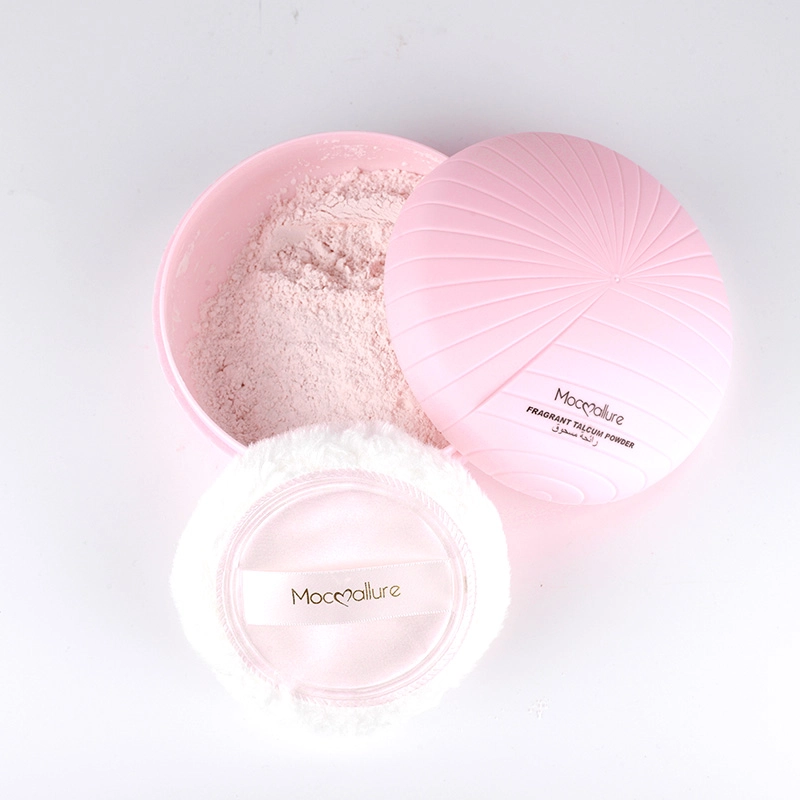
With Mocoallure’s ES5046 scented body powder, fragrance is already part of the buying brief. The sample request can establish the desired scent and the reference that will follow into the quotation. At label review, that reference connects the selected option to its technical information. From there, the reviewer needs the actual composition and inclusion level to calculate what the selected perfume contributes to that powder.
Work through the dosage calculation
For a worked example, assume that the perfume contains 0.2% of an allergen and accounts for 2% of the powder formula. The percentage contributed to the finished powder is calculated as follows:
0.2 × 2 ÷ 100 = 0.004%
In this example the perfume contributes 0.004% of the allergen, exceeding the 0.001% leave-on threshold. This example supplies no ES5046 formulation data and recommends no dosage. The reviewer then adds relevant contributions from other ingredients and applies any grouping rules before deciding the printed names.
Obtain a declaration that matches the scent being bought
Two fragrance references in one file call for clarification. For example, a Scent A sample and a Scent B declaration might indicate a document error or two linked references. Both labels in this example are hypothetical. The supplier’s explanation and matching documents determine which, before the assessment proceeds.
ES5046 is offered for OEM/ODM customisation, with multiple fragrance options available for discussion. Selecting a different scent can change the supporting information required for label review. A private label inquiry should identify the chosen option, intended EU markets and proposed product version. The technical information available for that project needs confirmation before the buyer treats the fragrance assessment as complete.
The document request should connect these details:
- Powder reference, formula version and intended use.
- Fragrance code, supplier reference and declaration revision date.
- Quantitative allergen information and the fragrance inclusion level.
- Relevant contributions from the rest of the formula.
- Draft ingredient wording and the contact arranging its review.
The buyer may never need to hold confidential composition data in the commercial file. It can follow an agreed route to the assessor. Procurement does, however, need a clear outstanding-items list, showing any response still due from the manufacturer or fragrance supplier. This gives the project a usable status without circulating sensitive formulation details unnecessarily.
The body powder sourcing guide covers broader product and supplier questions. Sample texture, container suitability and scent preference belong in that buying discussion.
Separate ingredient approval from artwork approval
Print sign-off is useful when its scope is written down. Approval of a colour proof can close the design discussion while ingredient wording is still under review. The final text check follows ingredient clearance and compares the agreed list, word for word, with the proof.
Confirm substance names and grouped entries
Some Annex III entries group related substances. An older fragrance declaration may therefore need further interpretation before its names can be used on a current label. The reviewer must apply the relevant naming and aggregation conditions, rather than transfer a list of chemical names directly into artwork. Cosmetics Europe’s implementation guidance is a useful companion to the legal text for these questions.
There may be no change to print after the new declaration has been reviewed. The useful record in that situation identifies the formulation assessed and confirms that its existing wording remains suitable. That gives the artwork coordinator a positive approval to reuse the text, rather than silence to interpret.
Check the final print proof
Space for the full ingredient list should be reserved during layout. If extra names will not fit, the packaging team needs to revise the arrangement before print release. The final proof review still covers legibility, omissions and the applicable language and presentation requirements in the destination markets.
The packaging and artwork approval checklist supports that print review. Each sign-off needs file references: the formula, dated declaration, ingredient wording and print proof. If the ingredient assessment is still open, an approval of colours and layout closes only the design task. The record should make that limited approval clear to whoever releases printing.
Treat scent changes as version changes on repeat orders
A reorder email saying “same as last time” leaves the technical comparison unstated. The repeat-order check covers perfume supplier and code, dosage, and relevant base ingredients against the approved formula. Changed information goes back for review through the responsible person or assessor. Only then can the project decide whether the previous ingredient wording remains suitable.
Mocoallure offers formula and packaging development, making a combined product-and-packaging brief relevant to an ES5046 variation. The request can identify the approved starting version and specify the proposed scent or packaging change. Including the regulatory review contact helps establish the information route during development, before a buyer commits to artwork based on the previous version.
A shared label is possible where review of the relevant formulations supports the same wording. The records still need to list the scent codes covered. Without that link, a reorder for one fragrance can be associated with technical documents for another, especially when the outer design looks identical.
Set the release conditions before placing the bulk order
Before printing or shipment, the order record should answer a practical question: which version is cleared for the next step? The answer needs the product, formula and scent references, the approved label file and the status of open questions. An email approving the sample’s scent does not authorise every later step.
The release record also needs to cover the remaining cosmetic-compliance work: the product information file, safety assessment, notification and responsible-person arrangements. These duties continue to apply alongside fragrance-allergen labelling. Procurement should identify the coordinating contacts and the information needed for each task in the actual project.
Conclusion
The final handover to purchasing consists of the documented market-placement decision, assessed formula and scent references, and cleared ingredient text. These are the references for the print proof and the next order. An open question stays visible with its owner; it should not disappear inside a general sample approval email.
Discuss an ES5046 sourcing project
An ES5046 scented body powder project inquiry can start with the EU markets, preferred scent and target quantity. Packaging requirements and a regulatory review contact help define the next discussion. For a variation, include the reference being changed and the intended result. Mocoallure can discuss available options and project-specific information before the buyer finalises the order.
FAQ
Does the 2028 deadline cover a new import order?
It is not a general extension for new market placement. It concerns qualifying stock already placed on the EU market under the transition conditions. A buyer relying on the later date needs the responsible person’s assessment of the batches and records concerned. Manufacture before July 2026 alone is insufficient.
Is parfum enough on a scented body powder label?
The perfume composition can be listed as parfum. Where Annex III calls for individual allergen names, those names are additional. Deciding which ones belong on a particular powder requires its finished-formula assessment. Copying parfum from the previous label does not establish that the rest of the list is complete.
Can several fragrances share one ingredient list?
Yes, if assessment supports that wording for every formulation concerned. A change in fragrance composition or dosage may lead to a different result. The approved-label record should therefore identify all the scent and formula references covered, even where the printer receives just one text file.